
Commercial vehicle operators face growing challenges in road safety, driver supervision, incident investigation, and fleet management. Public transportation companies must protect passengers, logistics businesses need to manage vehicles and cargo, and industrial operators must improve visibility around heavy machinery. For vehicle manufacturers and automotive electronics distributors, these challenges create demand for reliable, adaptable monitoring solutions.
A Vehicle Surveillance System combines vehicle cameras, recording equipment, displays, and optional intelligent monitoring technologies to help businesses observe vehicle surroundings, preserve video footage, and improve operational oversight. Depending on the configuration, it can support real-time viewing, incident playback, driver assistance, and fleet monitoring.
For public transport operators, school bus companies, taxi fleets, logistics providers, RV manufacturers, and industrial vehicle users, the right system depends on more than the number of cameras. Buyers must evaluate recording capabilities, installation requirements, environmental performance, system compatibility, and customization options.
MCY Technology provides in-vehicle monitoring products and solutions for commercial and specialized vehicles. This guide explains how a Vehicle Surveillance System works, how different industries can use it, and what international B2B buyers should consider when sourcing equipment for their fleets or projects.
1. What Is a Vehicle Surveillance System?
A Vehicle Surveillance System is an integrated solution designed to capture, display, record, and, where supported, transmit video from a moving or stationary vehicle. Unlike a basic reversing camera, a complete system can cover multiple areas and support both immediate driver observation and subsequent incident review.
Depending on the application, a system may include:
- Vehicle cameras: Capture front, rear, side, cabin, or cargo-area views.
- In-cabin monitors: Display camera images to help drivers observe their surroundings.
- Mobile Digital Video Recorder (MDVR): Records video from connected cameras for later playback.
- GPS and communication modules: Support location tracking and selected remote monitoring functions.
- AI-assisted monitoring: Provides supported alerts for specific driving risks, driver behaviour, or objects around the vehicle.
Not every configuration includes every component. A simple commercial vehicle installation may require cameras and a monitor, while a large fleet may need multi-channel recording, GPS tracking, remote video access, and additional safety functions.
MCY offers products across these categories, including vehicle cameras, Mobile DVRs, camera-monitor kits, and intelligent vehicle monitoring solutions. Buyers can explore the MCY vehicle surveillance solutions to identify options relevant to their applications.
2. How a Vehicle Surveillance System Improves Fleet Safety
2.1 Vehicle Surveillance System for Blind Spot Visibility
Large vehicles often have significant blind spots caused by their dimensions, body structure, and driving position. These areas can make turning, reversing, lane changes, and manoeuvring in confined spaces more difficult.
A multi-camera Vehicle Surveillance System can provide additional views around the vehicle. Front, rear, and side cameras help drivers observe areas that may be difficult to see directly, while selected surround-view systems combine multiple camera feeds to provide a broader view of the vehicle’s immediate environment.
For buses, trucks, forklifts, and construction machinery, camera positioning is particularly important. Buyers should assess vehicle dimensions, mounting locations, viewing angles, and the specific areas that need monitoring before selecting a configuration.
2.2 Vehicle Surveillance System with Intelligent Driver Assistance
Some monitoring systems incorporate Advanced Driver Assistance Systems (ADAS), Driver State Monitoring (DSM), or Blind Spot Detection (BSD).
These technologies serve different purposes. ADAS may provide alerts for supported driving risks, DSM can monitor specified driver behaviours, and BSD can warn drivers when detected objects enter designated areas around the vehicle.
For fleet operators, these features can complement driver training, safety procedures, and routine vehicle inspections. However, the functions available depend on the selected product, sensor configuration, installation, and operating conditions.
Buyers should request clear documentation explaining which events the system can detect, how alerts are delivered, and whether additional hardware is required.
2.3 Vehicle Surveillance System for Safer Manoeuvring
Reversing and low-speed manoeuvres can be challenging in loading bays, depots, construction sites, and crowded urban streets. A suitable camera and monitor arrangement can provide visual information that helps drivers judge nearby obstacles and surrounding traffic.
Industrial users may require additional camera views or specialized detection systems to address the risks associated with moving machinery and nearby workers.
A Vehicle Surveillance System should therefore be designed around actual vehicle movements and workplace risks rather than simply installing the same camera package on every vehicle.
3. Video Evidence and Vehicle Surveillance System Integration
3.1 Recording Footage for Incident Investigation
One of the key reasons businesses install a Vehicle Surveillance System is to preserve video footage that may be needed after an incident.
When configured with compatible recording equipment, the system can help fleet managers review traffic collisions, vehicle damage, loading disputes, passenger complaints, and other operational events. Footage from several camera views may provide a clearer understanding of what happened before and during an incident.
Before purchasing, confirm the recording device, number of supported channels, storage method, recording settings, and footage retrieval process. Buyers should also verify whether the system records continuously, records selected events, or supports both modes.
A camera system without recording capability may be suitable for live viewing but will not independently provide stored video evidence.
3.2 GPS Tracking and Remote Vehicle Monitoring
For fleets operating across several cities or regions, remote monitoring can reduce the need to inspect vehicles physically.
Compatible systems may support GPS positioning, route history, live video access, remote playback, and other fleet management functions. These capabilities can help authorized personnel locate vehicles, review operational events, and investigate reported incidents.
Connectivity requirements vary. Buyers should evaluate mobile network coverage, data usage, platform compatibility, and remote access permissions in the destination market.
MCY’s logistics transport solutions provide a starting point for discussing monitoring requirements for commercial transportation fleets.
3.3 Supporting Driver Management and Training
Recorded video can provide practical material for internal safety reviews and driver coaching. Fleet managers may use relevant footage to discuss risky manoeuvres, review operating procedures, and identify recurring operational issues.
Where supported, AI-assisted monitoring can provide additional information about specific safety events. However, businesses should establish appropriate policies for accessing recordings, protecting personal information, retaining footage, and complying with applicable privacy requirements.
Video evidence can support an investigation, but it does not automatically determine legal responsibility or guarantee acceptance by an insurer or regulator.
4. Vehicle Surveillance System Applications Across Industries
4.1 Public Transportation and School Buses
Bus operators must manage passenger safety, traffic conditions, frequent stops, and interactions with pedestrians and cyclists. A suitable Vehicle Surveillance System can monitor the road, selected exterior areas, and, where appropriate, the passenger compartment.
For school buses, camera coverage may support the review of boarding incidents, vehicle movements, and passenger-related events. Operators should confirm that the selected system meets their specific operational and local regulatory requirements.
Bus manufacturers and fleet managers should evaluate the number of cameras, recording retention, display placement, installation access, and privacy considerations before standardizing equipment across a fleet.
4.2 Logistics and Freight Transportation
Trucking and delivery businesses face challenges involving traffic incidents, cargo disputes, vehicle damage, and driver supervision. A Vehicle Surveillance System with compatible MDVR and GPS functions can support video recording and selected fleet monitoring workflows.
For long-distance trucks and delivery vehicles, buyers should consider camera coverage, night-time performance, vibration resistance, storage capacity, and the practicality of retrieving footage after an incident.
For larger deployments, standardized configurations can simplify installation, maintenance, replacement planning, and staff training.
4.3 Taxi Fleets and Passenger Transport
Taxi and passenger transport operators may need road-facing and cabin-facing cameras to review incidents and improve operational accountability.
The appropriate setup depends on vehicle type, passenger privacy obligations, recording requirements, and the business’s safety policies. Buyers should establish who can access footage and how long it will be retained.
For vehicle conversion workshops and distributors, compatibility with different vehicle models and straightforward installation are also important purchasing factors.
4.4 Recreational Vehicles and Motorhomes
RVs and motorhomes have larger dimensions than many passenger vehicles, which can make reversing, parking, and navigating narrow roads more difficult.
A suitable monitoring setup may include front, rear, and side cameras, combined with an in-cabin display or compatible surround-view solution. Buyers should evaluate mounting positions, weather exposure, display readability, and electrical compatibility.
RV manufacturers, specialist distributors, and conversion businesses should confirm the intended camera configuration before ordering equipment in volume.
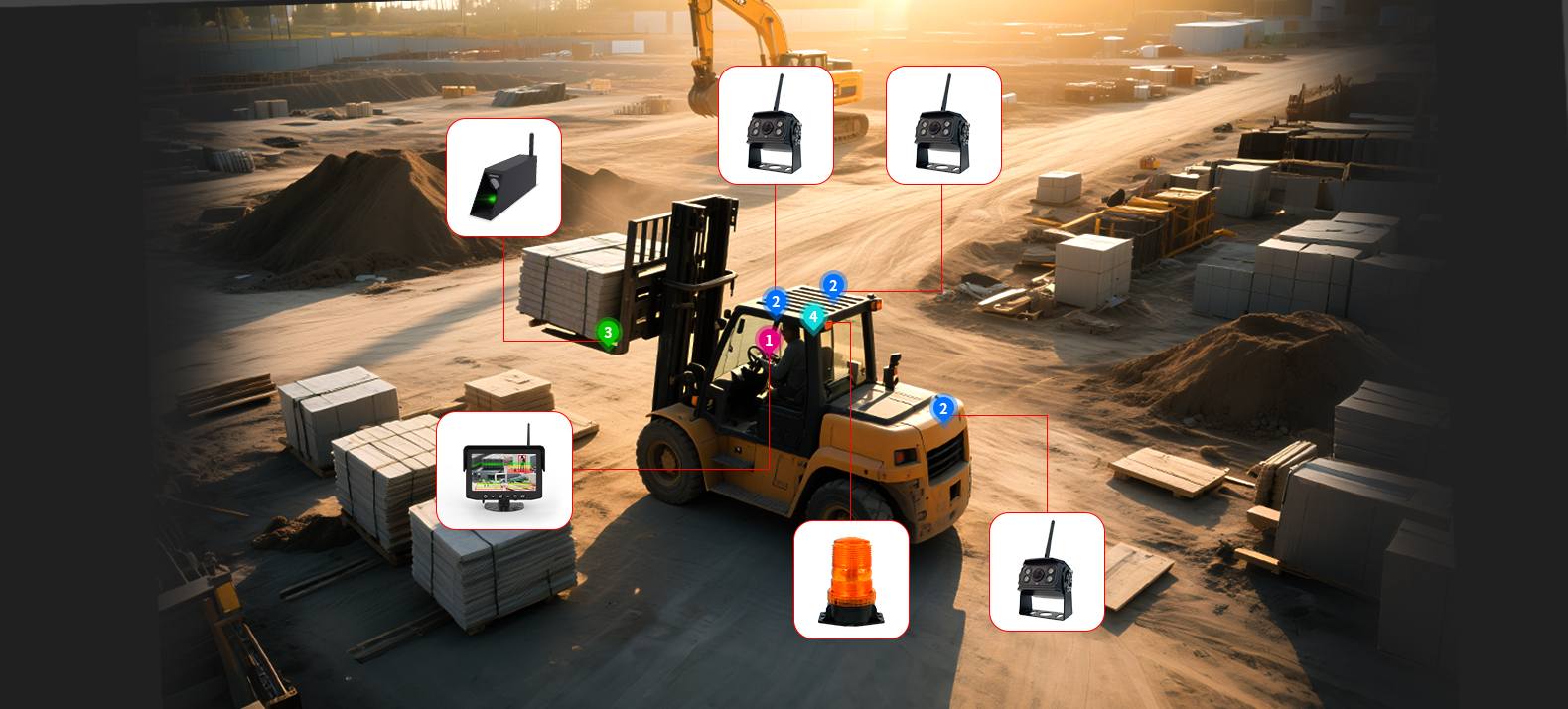
4.5 Forklifts, Construction, Mining, and Agricultural Vehicles
Industrial vehicles frequently operate in environments with restricted visibility, vibration, dust, moisture, and interaction between workers and moving machinery.
A Vehicle Surveillance System can provide additional visual information around equipment. Depending on the risk assessment, the configuration may require rear-view cameras, wireless cameras, AI-assisted pedestrian detection, or multi-camera monitoring.
MCY lists solutions for engineering and construction vehicles and other specialized vehicle categories. Industrial buyers should assess environmental requirements, installation constraints, and the specific risks of the workplace before selecting a system.
5. How to Choose the Right Vehicle Surveillance System
5.1 Define Your Camera Coverage Requirements
Start by identifying the areas that need monitoring and the purpose of each camera. A reversing application may require a single rear camera, while a bus or heavy-duty vehicle may need front, side, rear, and cabin coverage.
Consider vehicle dimensions, mounting positions, viewing angles, and whether the driver needs a dedicated monitor or a multi-view display.
Providing vehicle photographs, drawings, and application details helps the supplier assess the proposed configuration more accurately.
5.2 Evaluate Image Quality and Environmental Performance
Image quality should be assessed under realistic operating conditions, including bright sunlight, low light, backlighting, and rain where relevant.
For industrial vehicles, additional considerations include vibration, dust, moisture, temperature range, and connector durability. Buyers should request specifications and supporting documentation for the exact model rather than assuming every product in a supplier’s range has the same environmental rating.
5.3 Confirm Recording, Storage, and Connectivity
If video evidence is a core requirement, determine whether the proposed system includes an MDVR or requires a separate recording unit.
Confirm the number of supported camera channels, storage options, recording modes, GPS functions, and remote access capabilities. For large fleets, also establish how footage will be retrieved, who can access it, and how long recordings need to be retained.
MCY’s Mobile DVR products are relevant for buyers evaluating vehicle recording options.
5.4 Assess Customization and OEM/ODM Support
Vehicle manufacturers, modification workshops, and system integrators often require customized equipment to match their vehicle platforms or project specifications.
Customization discussions may cover:
- Camera types, quantities, and mounting arrangements.
- Monitor size and installation location.
- Recording capacity and communication interfaces.
- Integration with compatible ADAS, DSM, or BSD equipment.
- Wiring, connectors, and vehicle electrical requirements.
- Branding, packaging, documentation, and delivery planning.
Not every modification is possible for every product. Request a technical feasibility review and written confirmation of the agreed configuration before placing a production order.
5.5 Compare Total Cost of Ownership
The initial purchase price is only one component of the total cost. Buyers should also consider installation, vehicle downtime, storage equipment, maintenance, replacement parts, technical support, and warranty terms.
Importers and wholesalers should pay particular attention to product consistency, spare-part availability, packaging requirements, and lead times. Clear agreements on these matters help reduce procurement risks and simplify ongoing fleet support.
6. Why Choose MCY Technology for Vehicle Surveillance System Projects?
MCY Technology supplies vehicle monitoring and safety products for commercial and specialized vehicles. Its published portfolio includes vehicle cameras, monitors, Mobile DVRs, electronic side mirrors, intelligent safety systems, and surround-view solutions.
For international B2B customers, MCY provides several areas to explore when planning a vehicle surveillance project:
- Application-based product selection: Discuss suitable configurations for buses, trucks, RVs, industrial vehicles, and other supported applications.
- Integrated monitoring options: Evaluate cameras, recording equipment, displays, and compatible intelligent functions as part of a complete system.
- OEM/ODM cooperation: Discuss customization requirements for vehicle manufacturers, distributors, and system integrators.
- Project-specific technical evaluation: Clarify camera coverage, installation arrangements, recording needs, and system compatibility.
- Commercial coordination: Confirm order quantities, product documentation, lead times, packaging, and support arrangements.
Explore the MCY official website and its vehicle monitoring solutions to review the available product categories.
Before making a purchasing decision, confirm the specifications, feature availability, regulatory documentation, and compatibility of the exact model with the intended vehicle and destination market.
7. Frequently Asked Questions About Vehicle Surveillance System
Q1. What does a Vehicle Surveillance System include?
Depending on the application, it may include vehicle cameras, an in-cabin monitor, an MDVR, GPS or communication modules, and selected intelligent safety functions. The exact configuration depends on the vehicle and project requirements.
Q2. Can a Vehicle Surveillance System record accident footage?
Yes, when the selected configuration includes compatible recording equipment. Buyers should confirm storage capacity, recording settings, camera coverage, and the procedure for retrieving footage.
Q3. Can the system support remote fleet monitoring?
Selected configurations support remote video access and GPS tracking through compatible hardware, connectivity, and software. Buyers should confirm the available functions and network requirements for their destination market.
Q4. Is a Vehicle Surveillance System suitable for industrial vehicles?
It can be suitable for forklifts, construction machinery, mining vehicles, and agricultural equipment when the configuration matches the operating environment. Camera placement, environmental protection, and additional safety requirements should be evaluated for each application.
Q5. Does MCY Technology offer OEM/ODM customization?
MCY provides OEM/ODM services. Buyers can contact the company to discuss product configuration, integration requirements, customization feasibility, order quantities, and delivery schedules.
Q6. What information should I provide when requesting a quotation?
Provide the vehicle type, intended application, required camera views, recording and connectivity needs, estimated quantity, destination market, and customization preferences. This information helps the supplier evaluate a suitable solution.
Conclusion: Build a More Effective Vehicle Surveillance System
A well-planned Vehicle Surveillance System can help businesses improve vehicle visibility, preserve video evidence, and strengthen fleet management procedures. From public transportation and school buses to freight fleets, taxis, RVs, and industrial machinery, the most suitable configuration depends on the operating environment and the organization’s safety objectives.
For B2B buyers, successful procurement requires careful evaluation of camera coverage, recording capabilities, connectivity, environmental durability, customization, and long-term support.
MCY Technology offers vehicle monitoring products and OEM/ODM cooperation opportunities for a wide range of commercial and specialized vehicle applications.
Contact MCY Technology to discuss your Vehicle Surveillance System project. Share your vehicle type, camera coverage requirements, recording needs, estimated order quantity, and customization expectations to request product information and a quotation.
Website: https://www.mcytech.com/
Email: sales@mcytech.com
Phone: +86-760-86638369
Post time: Oct-23-2026