
Recreational vehicles (RVs) are designed for long-distance travel, outdoor adventures, and comfortable mobile living. From compact camper vans to large motorhomes, these vehicles allow people to explore different destinations with greater flexibility. However, their larger dimensions and unique body structures can create visibility challenges that ordinary passenger vehicles do not experience.
Limited rear visibility, wide side blind spots, and difficult parking conditions make vehicle camera systems increasingly important for modern RVs. A reliable Recreational Vehicle Camera solution helps drivers monitor surrounding areas, improve visibility when reversing, and manage low-speed maneuvers with greater confidence.
For RV manufacturers, vehicle conversion companies, importers, wholesalers, and aftermarket installers, selecting the right camera configuration is also an important part of product development and vehicle safety planning.
MCY Technology provides vehicle camera and surveillance products for different vehicle applications, including motorhomes, buses, trucks, and other special vehicles. This guide explains the main types of RV camera systems, their functions, important selection criteria, and how to choose a suitable supplier for your project.
Why Does a Recreational Vehicle Need a Camera System?
An RV is usually longer and wider than a standard car. Some motorhomes also have extended rear sections, large side panels, and limited rear windows. These characteristics make it difficult for drivers to observe every surrounding area through conventional mirrors.
Installing a suitable Recreational Vehicle Camera system can help address several common visibility problems.
1. Reducing Rear Blind Spots
Rear visibility is one of the most common challenges when driving a motorhome. The rear body structure may block the driver’s direct line of sight, especially in large RVs and converted buses.
A rearview camera transmits images of the area behind the vehicle to an in-cabin monitor. Drivers can use the displayed image to check nearby obstacles when reversing or parking.
This is particularly useful when:
- Reversing into an RV campsite.
- Parking in a narrow garage or driveway.
- Approaching trees, walls, or other vehicles.
- Maneuvering in crowded parking areas.
- Checking the rear clearance of a long motorhome.
2. Improving Side Visibility
Large recreational vehicles may have significant blind spots along both sides. These areas can make turning, merging, and changing lanes more challenging.
Side-view cameras provide additional visual information about adjacent areas. When positioned appropriately, they can help drivers observe nearby vehicles and obstacles that may not be clearly visible through standard mirrors.
For wide-body motorhomes and customized RVs, side cameras can be an important part of a complete monitoring configuration.
3. Supporting Safer Parking and Low-Speed Maneuvering
Driving through a campsite or parking a motorhome in a limited space requires careful distance judgment. Small obstacles, bicycles, poles, and low walls may be difficult to identify from the driver’s seat.
A multi-camera solution can provide views from different directions. A 360-degree system can combine these images into a panoramic view, helping drivers understand the vehicle’s surroundings more conveniently.
4. Recording Driving Events
Some RV owners and commercial operators also require video recording. Recorded footage can help review incidents, understand driving situations, and provide supporting information when an accident or vehicle damage occurs.
For RV rental companies and commercial motorhome fleets, recording equipment can also support vehicle management and incident investigation.
Main Types of Recreational Vehicle Camera Systems
Different RV models have different monitoring requirements. A small camper van may only require a rearview camera, while a large motorhome may benefit from front, rear, and side cameras.
Understanding the available camera configurations helps buyers select a more appropriate Recreational Vehicle Camera solution.
1. RV Rearview Camera
A rearview camera is one of the most practical options for recreational vehicles. It is generally installed near the rear of the vehicle and connected to an in-cabin monitor.
The system allows drivers to observe the area behind the RV without relying entirely on mirrors.
Common applications include:
- Reversing and parking assistance.
- Rear obstacle observation.
- Monitoring the vehicle’s rear surroundings.
- Improving visibility in restricted parking spaces.
When selecting a rearview camera, buyers should consider the camera’s viewing angle, image quality, night visibility, installation position, and compatibility with the monitor.
For RV manufacturers and aftermarket installers, it is also important to plan cable routing and mounting positions according to the vehicle’s body structure.
2. RV Side-View Camera
Side-view cameras help monitor areas along the left and right sides of an RV. They can be particularly useful for long motorhomes, wide recreational vehicles, and customized camper conversions.
Depending on the installation configuration, side cameras can assist with:
- Observing adjacent lanes.
- Checking side clearance when turning.
- Monitoring nearby vehicles.
- Improving visibility during low-speed maneuvering.
- Supporting a more comprehensive camera layout.
For OEM projects, camera locations should be evaluated according to the vehicle’s width, mirror design, body panels, and expected field of view.
3. 360-Degree Surround View Camera System
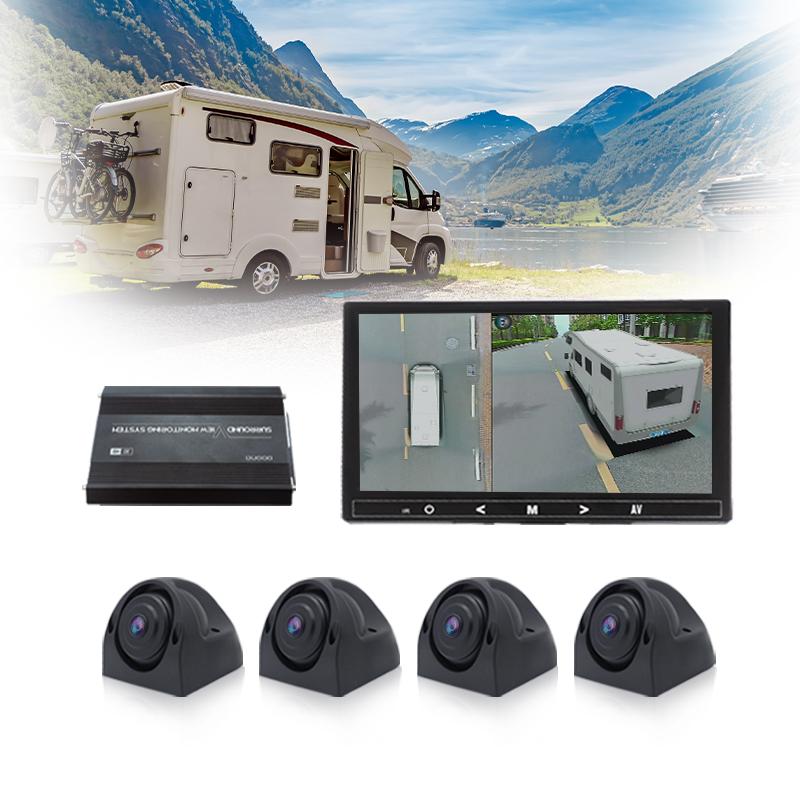
A 360-degree surround-view system is an advanced option for large recreational vehicles. It uses multiple cameras installed around the vehicle to create a panoramic view of the surrounding environment.
MCY’s 360 SVM Camera System is designed for cars, buses, trucks, school buses, motorhomes, ambulances, and other vehicles.
According to the product information, the system uses four high-resolution 180-degree fisheye cameras installed at the front, left, right, and rear of the vehicle. Image synthesis and distortion correction technologies combine the camera images into a 360-degree panoramic bird’s-eye view.
Its listed features include:
- Four high-resolution 180-degree fisheye cameras.
- Fisheye distortion correction.
- Seamless 3D and 360-degree image merging.
- Dynamic and intelligent viewing-angle switching.
- Flexible omnidirectional monitoring.
- 360-degree blind-spot coverage.
- Guided camera calibration.
- Driving video recording.
- G-sensor-triggered recording.
For motorhome applications, this type of Recreational Vehicle Camera system can help drivers observe the surroundings when parking, turning, or navigating confined spaces.
It is especially worth considering for large RVs where a single rear camera cannot provide sufficient surrounding visibility.
4. Multi-Channel Camera DVR System
A multi-channel camera DVR system connects several cameras to a central recording unit. This configuration allows users to monitor multiple areas and record video from connected cameras.
MCY’s Camera DVR Kits include different vehicle surveillance configurations for applications such as buses, trucks, vans, and other vehicles.
Depending on the selected product, a camera DVR solution can support multiple video inputs, local recording, and wireless transmission.
For RV projects, a multi-channel configuration may be suitable when buyers need front, rear, side, or additional monitoring cameras in one system.
Before purchasing, confirm the number of camera inputs, video compatibility, storage requirements, display arrangement, and recording functions of the selected model.
Important Features to Consider When Choosing an RV Camera
A suitable Recreational Vehicle Camera system should match the vehicle’s structure and actual operating environment. Buyers should evaluate more than the appearance of the camera or the advertised number of functions.
1. Camera Coverage and Viewing Angle
Camera coverage should be the first consideration.
A basic RV configuration may include one rear camera. More comprehensive installations may use front, rear, and side cameras. Large motorhomes may benefit from a 360-degree surround-view solution.
Before selecting a camera layout, consider:
- Overall vehicle length and width.
- Rear overhang and body structure.
- Existing mirror positions.
- Front and side blind spots.
- Camera mounting locations.
- The driver’s normal viewing position.
The objective is to choose a configuration that addresses the vehicle’s actual visibility limitations.
2. Image Quality and Night Vision
Image quality affects how clearly drivers can identify surrounding obstacles. Resolution, lens design, image processing, and monitor quality all influence the viewing experience.
Night visibility is also important because recreational vehicles may travel during early mornings, evenings, or through poorly illuminated parking areas.
When evaluating a camera system, buyers should request actual product specifications and, where possible, review sample footage under different lighting conditions.
Do not compare products based on resolution alone. Camera positioning, lens performance, and display compatibility also influence the final image.
3. Weather Resistance and Durability
Exterior cameras are exposed to rain, dust, sunlight, road vibration, and temperature changes. These environmental conditions should be considered during product selection.
Important factors include:
- Water and dust protection.
- Operating temperature range.
- Housing materials.
- Connector protection.
- Vibration resistance.
- Cable sealing and installation methods.
For RV manufacturers and conversion companies, the selected camera should be appropriate for its intended mounting position. Buyers should verify the environmental specifications of the exact product model.
4. Monitor Compatibility and Display Arrangement
A camera system is only useful when drivers can view its images conveniently.
The monitor should be positioned within the driver’s normal field of view without creating unnecessary distractions. Its input interfaces must also match the selected cameras and recording equipment.
When purchasing a Recreational Vehicle Camera kit, check:
- Screen size and mounting dimensions.
- Supported video formats.
- Number of video inputs.
- Display switching functions.
- Power supply requirements.
- Compatibility with the camera system.
For OEM projects, monitor integration should be considered during dashboard and interior design.
5. Recording and Storage Functions
Some RV users only require real-time camera images. Others need recorded video for incident review and vehicle management.
A compatible Mobile DVR can provide video storage and playback. Depending on the selected model, additional functions may include GPS positioning, remote video monitoring, and wireless connectivity.
MCY’s Mobile DVR product range includes products supporting video recording, playback, GPS positioning, and remote monitoring functions.
Buyers should confirm storage capacity, camera input configuration, connectivity, and recording requirements before selecting a model.
Recreational Vehicle Camera Applications Across Different RV Projects
The best camera configuration depends on how the vehicle is designed and used. Different customers may have different priorities when selecting a monitoring solution.
Private Motorhomes and Camper Vans
Private RV owners often travel through unfamiliar roads, mountain routes, campsites, and crowded parking areas.
A rearview camera can help with reversing, while side cameras provide additional visibility when turning or changing lanes. A 360-degree system may be more suitable for larger motorhomes that require broader surrounding coverage.
RV Rental Companies
Rental companies operate vehicles that may be driven by customers with different driving experience levels.
A suitable camera configuration can improve visibility and make parking more convenient. When recording functions are included, video footage may also help rental operators review incidents and manage vehicle-related claims.
For companies operating multiple vehicles, standardized camera configurations can simplify installation, maintenance, and replacement.
Motorhome Manufacturers and OEM Projects
For RV manufacturers, integrating camera systems during vehicle production can make installation planning more efficient.
OEM teams should evaluate:
- Camera quantity and positions.
- Wiring routes and connector requirements.
- Monitor installation location.
- Vehicle power compatibility.
- Recording requirements.
- System calibration and testing.
Early communication with a camera supplier can help identify suitable components before the vehicle enters mass production.
RV Conversion and Modification Companies
Some recreational vehicles are converted from vans, buses, or commercial vehicle platforms. These projects often have different body dimensions and interior layouts.
A customized Recreational Vehicle Camera configuration may be necessary to accommodate unique mounting locations, cable lengths, monitor positions, and camera coverage requirements.
Conversion companies should provide vehicle drawings or installation references when discussing customized solutions with suppliers.
How to Choose a Reliable Recreational Vehicle Camera Supplier
For importers, wholesalers, distributors, and RV manufacturers, choosing a reliable supplier is essential for product consistency and long-term project cooperation.
1. Evaluate the Product Range
A supplier with multiple camera categories can make it easier to develop a complete monitoring solution.
Relevant products may include:
- Rearview cameras.
- Side-view cameras.
- HD vehicle cameras.
- Camera monitor kits.
- 360-degree surround-view systems.
- Multi-channel camera DVR kits.
- Mobile DVR recording equipment.
MCY’s vehicle camera product catalog covers multiple product categories, allowing buyers to evaluate different configurations for their projects.
2. Check OEM and ODM Capabilities
Different RV models may require different camera layouts and system configurations.
Before starting an OEM or ODM project, buyers should discuss camera quantity, installation positions, cable requirements, monitor compatibility, and additional functions.
Clear technical communication helps both parties evaluate whether the proposed configuration is suitable for the target vehicle.
3. Review Quality Management and Product Documentation
Vehicle camera systems operate in environments involving vibration, temperature changes, and outdoor exposure.
Buyers should request relevant technical specifications, product documentation, and available testing information. Certifications and environmental ratings should be checked against the exact model and destination-market requirements.
4. Consider Technical and After-Sales Support
Installation and compatibility issues can affect the overall customer experience.
A supplier should be able to communicate clearly about wiring, system configuration, camera calibration, and troubleshooting.
For overseas distributors and project contractors, technical documentation and responsive communication can also help reduce the workload associated with installation and customer support.
Why Consider MCY Technology for Recreational Vehicle Camera Projects?
MCY Technology focuses on in-vehicle camera and surveillance solutions for different vehicle applications.
Its product portfolio includes HD cameras, camera monitor kits, Camera DVR Kits, Mobile DVRs, 360 SVM Camera Systems, and other vehicle monitoring products.
For recreational vehicle projects, MCY’s 360-degree surround-view solution is particularly relevant. The company’s product information specifically identifies motorhomes as one of its intended vehicle applications.
The system combines four fisheye cameras to provide a panoramic view of the vehicle’s surroundings and supports driving video recording and G-sensor-triggered recording.
MCY also provides Mobile DVR products with functions such as video storage, playback, GPS positioning, and remote monitoring, depending on the selected model.
For RV manufacturers, importers, distributors, and vehicle conversion companies, MCY can be considered as a supplier for evaluating different camera configurations.
Before placing an order, buyers should communicate their vehicle dimensions, camera coverage requirements, monitor arrangement, recording needs, and expected order quantities.
Conclusion
A suitable Recreational Vehicle Camera system can improve visibility and make driving, reversing, and parking a motorhome more convenient. Depending on vehicle size and application requirements, buyers can choose rearview cameras, side-view cameras, 360-degree surround-view systems, or multi-channel DVR solutions.
For private RV owners, the main priority may be easier parking and improved surrounding visibility. For manufacturers, distributors, and commercial operators, product compatibility, installation planning, system integration, and supplier support are equally important.
MCY Technology provides a range of vehicle camera and surveillance products that can be evaluated for recreational vehicle applications. Contact the MCY team to discuss your project requirements and explore a suitable camera configuration.
Contact MCY Technology
- Website: https://www.mcytech.com/
- Email: sales@mcytech.com
- Phone: +86-760-86638369
Frequently Asked Questions
1. What is a Recreational Vehicle Camera?
A Recreational Vehicle Camera is a camera system installed on an RV, motorhome, or camper van to help drivers monitor surrounding areas. Depending on the configuration, it may provide rear, side, front, or panoramic views.
2. How many cameras does a motorhome need?
The number depends on the vehicle’s dimensions and monitoring requirements. A basic setup may use one rearview camera, while a more comprehensive configuration may include front, rear, and side cameras. A 360-degree surround-view system typically uses four cameras.
3. Is a 360-degree camera system suitable for RVs?
Yes. A 360-degree camera system can be useful for larger RVs because it provides a panoramic view of the vehicle’s surroundings. It can assist drivers when parking, reversing, and maneuvering in confined areas.
4. Can an RV camera system record video?
Some camera systems support video recording when connected to compatible recording equipment. MCY’s 360 SVM Camera System lists driving video recording and G-sensor-triggered recording among its features. Buyers should confirm the storage configuration of the selected model.
5. Can a recreational vehicle camera system be customized?
Camera configurations can be evaluated according to different vehicle layouts and project requirements. OEM and ODM buyers should discuss camera quantity, mounting positions, cable arrangements, monitor compatibility, and required functions with the supplier.
6. What should importers check before buying RV camera systems?
Importers should evaluate image quality, camera coverage, environmental protection, monitor compatibility, recording functions, product documentation, quality management, and technical support. They should also confirm compatibility with their target RV models.
7. Why is a 360-degree camera useful for a large motorhome?
Large motorhomes have longer bodies and wider blind spots than ordinary passenger cars. A 360-degree camera combines images from multiple directions, helping drivers observe surrounding obstacles more conveniently during low-speed maneuvers and parking.
Post time: Nov-11-2026