
Wireless Crane Camera: Applications, Benefits, and Use Cases Explained
In lifting operations, visibility is everything. Whether it’s a truck-mounted crane on a construction site or a gantry crane working at a busy port, operators often face blind spots that make precise lifting difficult and risky. This is where a Wireless Crane Camera becomes a practical and reliable solution.
Designed as a standalone, vehicle-based vision system, a wireless crane camera provides real-time visual assistance directly to the operator, without complex wiring or platform integration. It helps improve safety, accuracy, and efficiency across a wide range of commercial vehicle and crane applications.
In this article, we’ll explain how wireless crane cameras are used in different industries, what problems they solve, and why they are increasingly adopted in modern lifting operations.
What Is a Wireless Crane Camera?
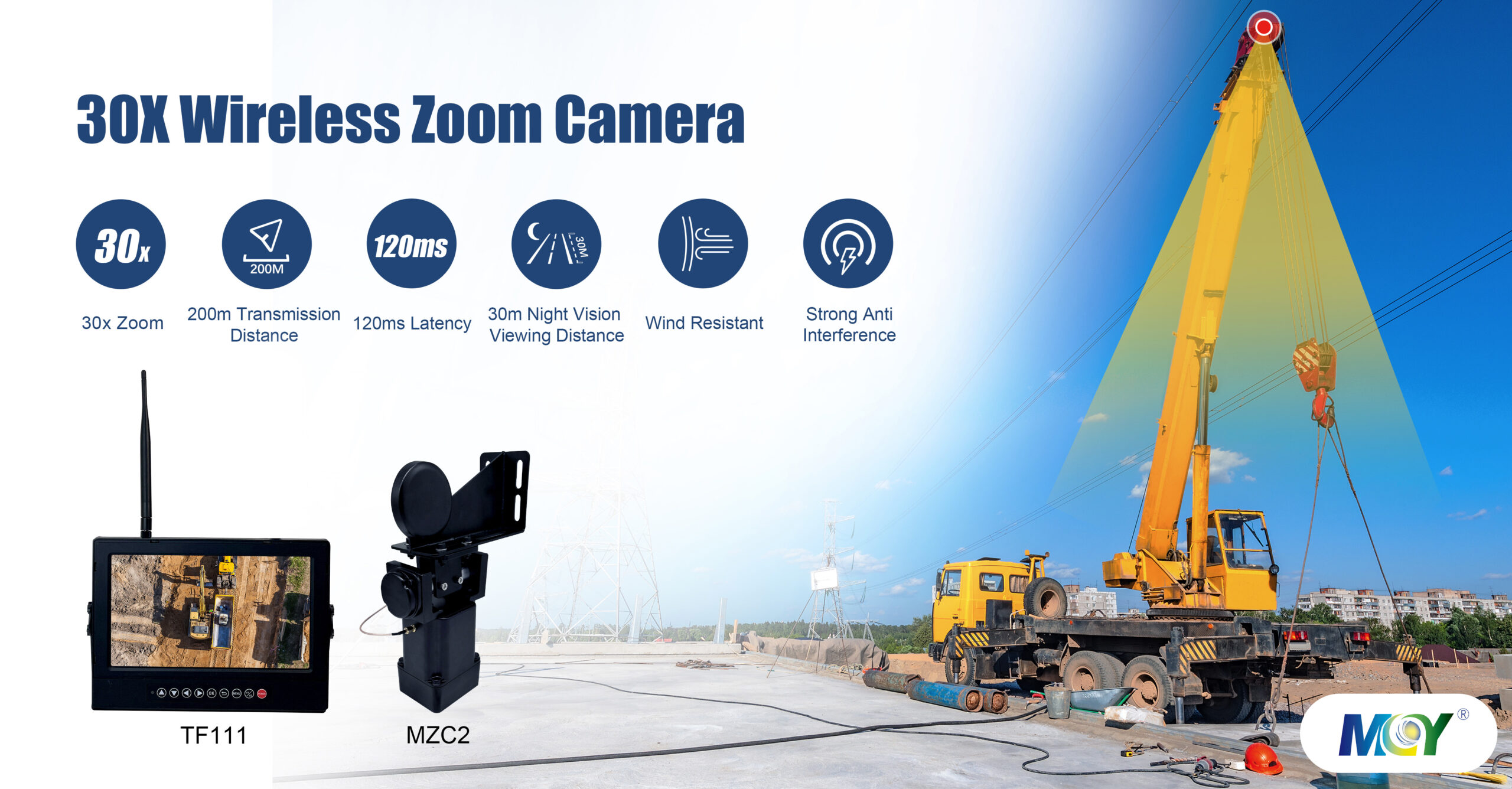
A Wireless Crane Camera is a compact industrial camera installed near the crane hook, boom, or lifting point. The camera wirelessly transmits live video to an in-cab monitor, allowing the operator to clearly see areas that are normally hidden from view.
Compared with wired systems, wireless crane cameras are easier to install, better suited for rotating or telescopic cranes, and more flexible for mobile commercial vehicles. The system works independently on the vehicle, offering direct visual support to operators during daily lifting tasks.
Typical Application Scenarios by Industry
1. Construction Sites
Construction sites are one of the most common environments for wireless crane cameras.
Typical applications include:
● High-rise and super high-rise construction
● Tower cranes, truck-mounted cranes, and crawler cranes
Common challenges:
● Limited visibility below the hook
● Blind spots during lifting and lowering
● Mismatch between the signalman’s view and the operator’s perspective
How a wireless crane camera helps:
● Provides a real-time view of the lifting position
● Enables precise hook alignment and load placement
● Reduces repeated adjustments and wasted time
● Helps prevent collisions, mis-lifts, and accidental damage
With a clear visual reference on the in-cab monitor, crane operators can work more confidently and efficiently, even in complex or crowded job sites.
2. Ports and Terminals
Ports and terminals require fast, accurate, and safe lifting operations to keep goods moving.
Typical applications:
● Quay cranes and gantry cranes
● Container handling
● Bulk cargo loading and unloading
Operational benefits:
● More accurate container positioning
● Faster loading and unloading cycles
● Reduced reliance on manual hand signals
Key requirements:
● Long-distance wireless transmission
● Strong resistance to interference in busy environments
A wireless crane camera allows operators to maintain a clear view of the load and target area, even when working at long distances or in visually complex port environments.
3. Factories and Industrial Production
In industrial settings, cranes are often used in hazardous or high-temperature environments.
Common use cases:
● Steel mills and foundries
● Heavy equipment assembly workshops
● Overhead cranes and bridge cranes
How wireless crane cameras add value:
● Monitor high-temperature or dangerous areas from a safe distance
● Improve operator safety during heavy lifting
● Enable accurate positioning of large or sensitive components
By giving operators a clear view of the load and surroundings, wireless crane cameras help reduce risks and improve consistency in industrial lifting operations.
4. Warehousing and Logistics Centers
Warehousing and logistics operations focus on efficiency and damage prevention.
Typical scenarios:
● High-bay warehouses
● Oversized or heavy cargo handling
● Repetitive lifting operations
Key advantages:
● Reduce collisions with racks and stored goods
● Improve load positioning accuracy
● Lower operator fatigue by reducing guesswork
A wireless crane camera acts as an extra set of eyes, helping operators work more smoothly and confidently throughout long shifts.
5. Power and Energy Industry
Energy-related projects often involve complex lifting tasks in challenging environments.
Applications include:
● Wind turbine installation
● Substation equipment lifting
● Oil, gas, and chemical facility construction
Benefits in energy projects:
● Visual assistance in complex or obstructed environments
● Improved safety during high-risk lifting operations
● Better coordination between operators and ground personnel
In these demanding scenarios, a reliable wireless crane camera significantly improves operational safety and control.
Key Benefits for Commercial Vehicle and Crane Operators
For companies using cranes on commercial vehicles, a Wireless Crane Camera is a simple yet effective way to improve daily operations.
● Real-time visual assistance during lifting and positioning
● Reduced blind spots around the hook and load
● Improved coordination between the operator and ground crew
● Higher positioning accuracy in tight or elevated spaces
● Lower risk of accidents, mis-lifts, and equipment damage
● Local video recording for post-operation review or training
Because the system is fully vehicle-based, it does not require network connectivity, cloud platforms, or system integration, making it easy to deploy and operate.
Wireless Crane Camera Product Features
MCY’s wireless crane camera solutions are built for real-world working conditions:
● 30x Zoom
Allows zoom control via a foot pedal, significantly improving operational efficiency and precision.
● 200M Transmission Distance
Supports up to 200 meters of wireless transmission distance, ideal for high-altitude or large-scale lifting operations.
● 30M Night Vision Distance
Provides clear images up to 30 meters at night, ensuring reliable performance in low-light environments.
● Wind Resistance Design
Equipped with a damping mechanism that minimizes shaking in strong winds, ensuring stable video at high elevations.
● IP67 Waterproof Rating
Fully weather-resistant and capable of operating in heavy rain, dust, or snow.
● Quick and Easy Pairing
Once paired for the first time, no re-pairing is required, making daily use more convenient.
● Video Recording Support
Supports up to 128 GB of video storage for recording and playback.
Why Choose MCY Technology?
Founded in 2012, MCY Technology Limited is a national high-tech enterprise specializing in advanced vision systems for commercial and special vehicles. With a 3,000 sqm manufacturing facility and a strong R&D team, we provide flexible OEM/ODM services and customized solutions to customers in over 150 countries.
Conclusion
A Wireless Crane Camera is no longer just an optional accessory—it is a practical tool for safer, more efficient lifting operations. From construction sites and ports to factories, warehouses, and energy projects, wireless crane cameras help operators see clearly, work accurately, and reduce risks where it matters most.
How to Get More Information
For detailed information and professional technical support, please contact us at sales@mcytech.com or visit MCY’s official website.
Post time: Jan-28-2026